
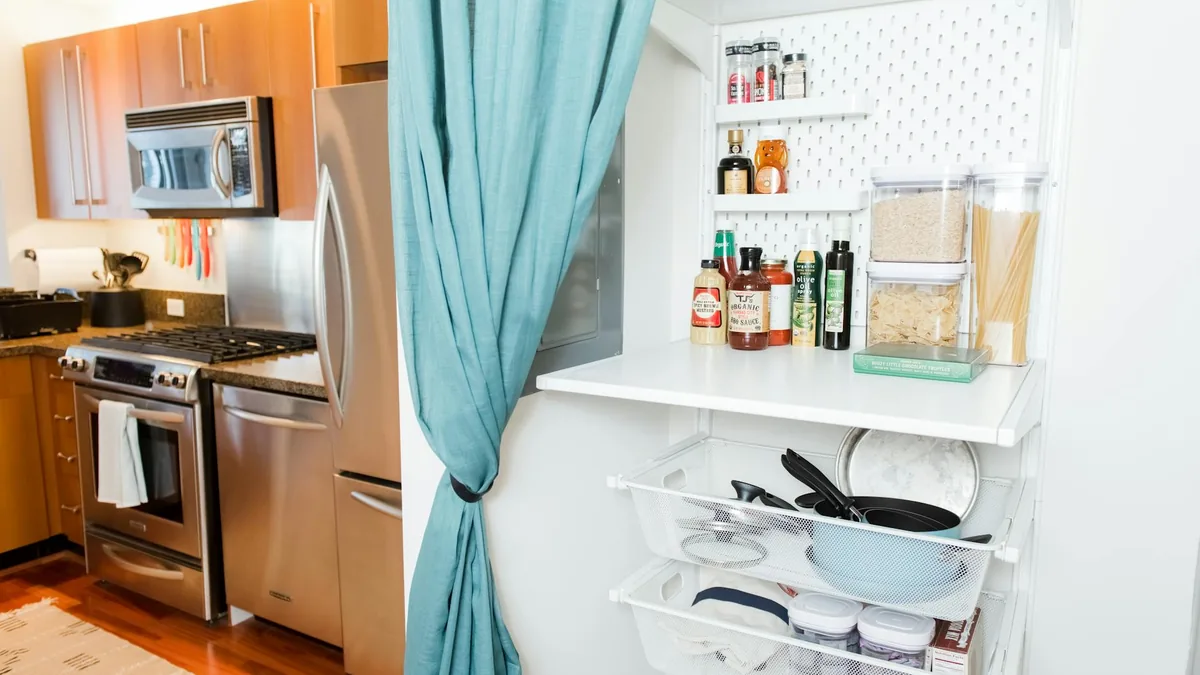
If your pantry gets messy the minute life gets busy, you don’t need a total makeover—you need a simple system. Here’s how to organize a kitchen pantry with clear zones, easy containers, and cabinet-friendly habits that are realistic to keep up.
To organize your kitchen pantry in a way that lasts, set up simple “zones” (breakfast, snacks, dinner basics, baking) and keep the most-used items at eye level. Use a small number of container types so refilling is easy, and label only what you’ll actually maintain. The best system is the one that makes putting groceries away faster—not prettier.
Quick pantry setup options (pick what fits your space)
| Approach | Best for | What to do | Watch-outs |
|---|---|---|---|
| Zones + original packaging | Busy households, low-maintenance routines | Group items by use (snacks, pasta, baking) and corral with bins | Boxes/bags can slump—use bins to keep stacks from toppling |
| Decanting into containers | People who bake often or want quick inventory checks | Store flour, sugar, rice, cereal in a few matching container sizes | More upkeep—only decant what you refill regularly |
| Hybrid (most realistic) | Most kitchens | Decant staples; keep the rest in packaging inside labeled bins | Don’t over-label—keep categories broad |

Who this kitchen pantry system works best for
- Busy families: Broad categories and grab-and-go bins make it easier for everyone to put things back.
- Small kitchens: A few stackable bins and one “backstock” area prevent overflow in tight kitchen pantry cabinets.
- Meal-preppers: Keeping dinner basics together (pasta, rice, sauces, canned goods) cuts down on weeknight rummaging.
- Anyone tired of re-organizing: This focuses on maintenance habits, not a one-time reset.
How to organize a kitchen pantry (without making it a whole project)
- Start with a “keep it moving” reset. Pull out one shelf at a time. Toss obvious expired items, and make a quick donate pile for food you won’t use.
- Create 5–7 zones max. Too many categories = decision fatigue. Try: Breakfast, Snacks, Dinner Basics, Canned Goods, Baking, Drinks, Backstock.
- Use bins to create boundaries. Bins stop small items from migrating and make it easier to lift a whole category out at once. One bin per zone is often enough.
- Pick a container strategy you’ll maintain. If you decant, keep it to true staples you buy again and again (flour, sugar, rice, oats). For everything else, keep packaging and use bins.
- Make “eye-level” your power zone. Put daily items where you naturally reach first. Less-used appliances, entertaining supplies, or bulk items can go higher or lower.
- Plan for backstock on purpose. If you buy extras, designate one shelf or bin for duplicates. This prevents the classic pantry problem: five open bags of the same thing.
- Label for speed, not aesthetics. Labels should help other people in the house put things away. Keep them simple: “Snacks,” “Baking,” “Pasta & Rice.”
Cabinet-specific tip: If your pantry is mostly kitchen pantry cabinets (not a walk-in), prioritize pull-out bins or turntables for deep shelves so items don’t disappear in the back.

A simple decision framework: what should go where?
If you’re stuck deciding placement, use this quick rule set:
- Daily use → eye level. Breakfast items, snacks, coffee/tea, and lunch add-ons belong where you can grab them fast.
- Heavy items → waist to chest height. Canned goods, jars, and bulk staples are safer and easier to lift from the middle.
- Kid-accessible items → one dedicated bin or shelf. Give kids a snack zone you’re comfortable with, so they aren’t digging through everything.
- Rarely used → top shelf. Party supplies, specialty ingredients, and backup paper goods can live up high.
- Messy packaging → contained. Open bags (chips, tortillas, baking chips) do better inside a bin so crumbs don’t spread.
When in doubt, optimize for the moment groceries come home: if it’s easy to put away, it’s easier to keep organized.
Final verdict: the best kitchen pantry is the one you can maintain
A functional kitchen pantry doesn’t require a full weekend or a matching-everything makeover. Set up a few clear zones, contain the “small stuff” with bins, and use your most convenient shelves for what you reach for daily. If you’re working with kitchen pantry cabinets, focus on visibility—pull-out bins, turntables, and a dedicated backstock spot will do more for your routine than over-complicated categories.
FAQ
How do I keep my pantry organized after a grocery run?
Keep one “backstock” bin or shelf for extras, and always place new items behind older ones in the same zone. If you’re short on time, at least put everything into the right category—even if it isn’t perfectly lined up.
Should I decant everything into matching containers?
No—only decant staples you refill often and want to see at a glance (like rice, flour, oats). For most items, keeping packaging and using bins is faster and more realistic to maintain.
What’s the best way to organize deep kitchen pantry cabinets?
Use pull-out bins or handled baskets so you can lift a whole category out. A turntable helps for oils, vinegars, nut butters, and small jars that tend to get lost in the back.
If you’re in a “reset the house” mood, save this pantry plan and tackle one shelf today. Then explore our other simple home organization guides for small changes that make daily routines feel easier.