
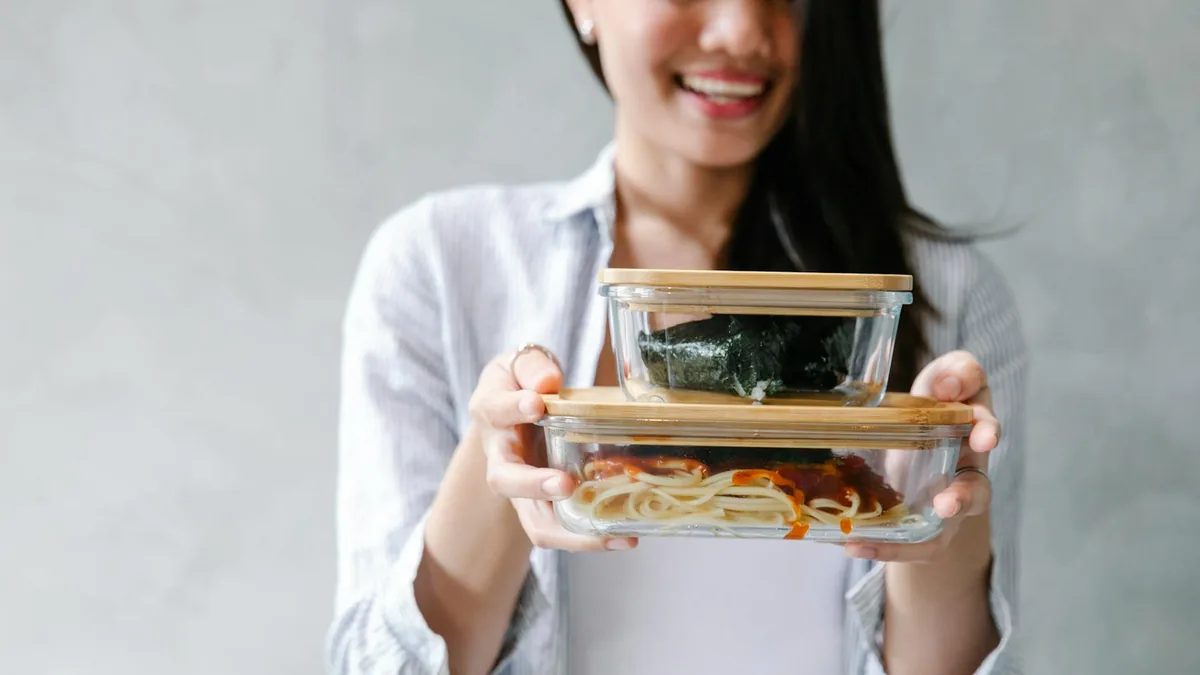
If your cabinets are full of mismatched tubs and missing lids, this guide helps you narrow down the right food containers for your routine—without overbuying or overcomplicating it.
The best food containers are the ones that fit your real routine: a few everyday sizes, reliable food containers with lids that don’t pop off, and a storage setup that doesn’t turn into a lid graveyard. If you reheat often or want to avoid stains and odors, glass food containers are usually the simplest upgrade. If you pack lunches daily or need lightweight options, a small set of sturdy plastic containers can still work—especially when you keep the collection tight and consistent.
Quick comparison: glass vs. plastic food containers
| Feature | Glass food containers | Plastic food containers |
|---|---|---|
| Best for | Reheating, leftovers, sauces, odor-prone foods | Lunch bags, kids’ snacks, lightweight grab-and-go |
| Stains & odors | Typically resists both better | More likely to stain/hold odors over time |
| Leak control | Great when lids seal well; weight helps keep it stable | Depends heavily on lid design and wear |
| Cabinet space | Bulkier/heavier; stacking matters | Often nests more easily |
| Everyday feel | More “set it and forget it” for reheating and storage | More flexible for busy days and travel |

What to look for when choosing food containers
- Pick 2–3 core sizes you’ll actually use. Most kitchens do best with a small (snacks/sides), medium (single portions), and large (family leftovers) option. Too many “special” sizes usually becomes clutter.
- Prioritize lids first. The whole system rises or falls on the lids. Look for food containers with lids that feel secure, sit flat, and don’t warp easily. If you’re constantly hunting for matches, it’s a sign you need fewer styles.
- Decide based on how you reheat. If you regularly reheat meals, glass food containers are often easier to live with because they handle tomato-based sauces and strong-smelling foods without lingering stains or odors.
- Think about your “leak risk” foods. Soups, dressings, cut fruit, and saucy leftovers need a confident seal. If you carry containers in a work bag, choose a lid style designed for transport and don’t rely on “close enough.”
- Stacking beats nesting (most of the time). Containers that stack neatly in the fridge help you see what you have and reduce forgotten leftovers. In cabinets, nesting can help—just make sure it doesn’t create a lid pile.
- Choose a simple storage rule for lids. A small bin, a divider, or one dedicated drawer section keeps lids from taking over. Aim for a setup where you can grab a lid with one hand.
Quick sanity check: If you can’t put everything away in under a minute, you probably have too many containers or too many types.

Pros and cons to keep it realistic
Glass food containers
- Pros: Great for reheating, tends to resist stains/odors, feels “cleaner” for saucy foods, easy to see what’s inside.
- Cons: Heavier in lunch bags, takes more cabinet space, can chip/break if dropped, lid quality still matters.
Plastic food containers
- Pros: Lightweight, convenient for packed lunches and kids, often nests well, easy to keep extras for sharing leftovers.
- Cons: More likely to stain or hold odors, lids can warp over time, mismatched sets pile up fast.
If you’re torn, a common “best of both” approach is glass for home leftovers + a small, consistent plastic set for lunches.
Final verdict: choose a small, consistent container system
The most helpful food containers aren’t the fanciest—they’re the ones you can grab quickly, seal confidently, and store without chaos. If your main pain points are stains, smells, and reheating, lean toward glass food containers for your everyday leftovers. If you’re packing meals on the go, keep a streamlined set of food containers with lids that all match, stack, and fit your lunch bag.
For most busy homes, the win is consistency: fewer shapes, fewer lid styles, and a simple lid-storage spot so putting things away stays easy on your tired days.
FAQ
How many food containers should I keep?
Keep what fits your weekly rhythm: enough for a couple days of leftovers plus lunches, without overflowing your cabinet. If you dread opening the container drawer, it’s usually time to pare down to one main set.
Why do my lids stop fitting properly?
Warping and wear are common, especially with frequent washing and heat exposure. If lids no longer seal, it’s often better to replace that style (or simplify to a new matching set) than keep fighting leaks.
What’s the easiest way to organize food containers with lids?
Stack bases by size and store lids vertically in a small bin or divider so you can flip through them like files. The goal is one quick glance—not a pile you have to dig through.
Want to make your kitchen feel easier day-to-day? Browse our other simple storage and cleaning guides for quick wins you can do in under an hour.