
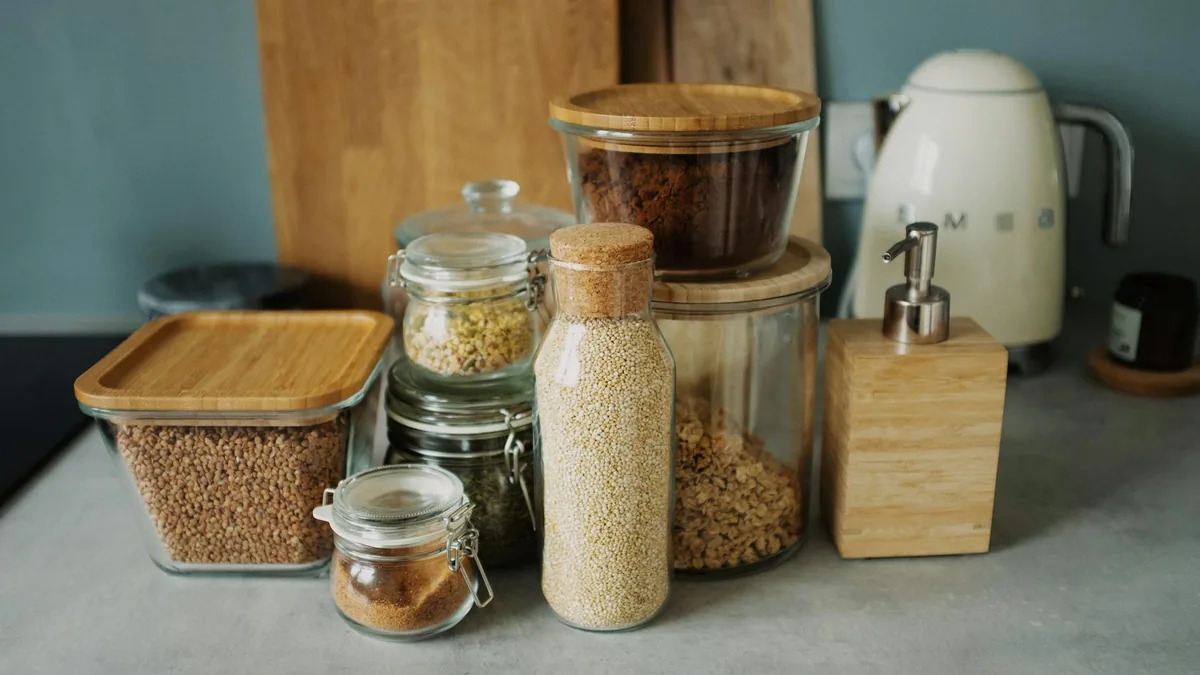
If your cabinet is overflowing with mismatched lids, it’s time to simplify. This guide breaks down what to look for in food storage containers—materials, shapes, lid styles, and an easy system for keeping them organized.
The best food storage containers are the ones you’ll actually use every day: a small, repeatable set of sizes, easy-to-match lids, and shapes that stack neatly in your fridge and cabinets.
Start by choosing one main material (glass or plastic) and prioritize storage containers with lids that seal well, nest/stack easily, and fit your routine—leftovers, meal prep, lunches, or freezer storage.
Quick Comparison: Glass vs. Plastic vs. Silicone
| Type | Best for | Watch-outs |
|---|---|---|
| Glass | Leftovers, reheating, reducing stains/odors | Heavier; can chip/break if dropped |
| Plastic | Lunches, lightweight stacking, everyday grab-and-go | Can stain or hold odors; may warp over time |
| Silicone | Small spaces, flexible storage, some collapsible options | Can be floppy for stacking; quality varies by lid design |

What to Buy Based on Your Real Life
- If you pack lunches often: Go for lightweight food containers with lids that fit in bags, plus a couple of leak-resistant options for soups or saucy foods.
- If you cook dinner most nights: Prioritize stackable medium and large containers for leftovers, plus a few shallow ones that cool quickly in the fridge.
- If you meal prep: Choose a set with repeatable shapes (same footprint) so they stack like building blocks—your fridge will instantly look calmer.
- If you freeze food: Pick containers that handle cold well and have lids that don’t pop off easily; include a few smaller sizes for sauces, broth, or chopped herbs.
- If you’re short on cabinet space: Look for nesting containers and a lid system that doesn’t require a “lid avalanche” every time you open the door.
Buying Considerations That Actually Matter
Before you replace everything, take five minutes to notice what’s causing the daily frustration: leaks, stains, missing lids, awkward shapes, or containers that don’t fit your shelves. Then shop for solutions to that problem.
1) Lids: the make-or-break detail
- Matchability: If every container needs a different lid, your kitchen will feel messy fast. Sets with interchangeable lids are easier to keep organized.
- Seal style: For everyday leftovers, a simple snap-on lid may be enough. For soups or transport, look for a tighter seal and a lid that feels secure all the way around.
- Ease of cleaning: Lids with lots of grooves can trap residue. If you hate scrubbing, simpler designs are usually easier to live with.
2) Shapes and sizes: fewer is usually better
- Pick 3–4 “workhorse” sizes: small (snacks/sauces), medium (leftovers), large (batch cooking), and one shallow option (sliced fruit, sandwiches, quick-cooling leftovers).
- Choose stack-friendly shapes: Squared/rectangular containers often use fridge space more efficiently than round ones, especially for shelves and drawers.
- Think about your fridge layout: If you use bins/drawers, measure mentally: will the containers stack without wobbling or wasting vertical space?
3) Material: choose what you’ll maintain
- Glass: Great if you reheat often and want less staining and odor. It also looks tidy in the fridge, which can reduce food waste.
- Plastic: Practical for busy days and kids’ lunches. If staining bothers you, reserve plastic for drier foods and keep tomato-based leftovers in glass if possible.
- Silicone: Helpful for flexible storage (and some collapsible options), but make sure the lid system is sturdy enough for your routine.
4) A simple organization setup (so lids stop disappearing)
- Dedicate one “container zone”: One shelf or one cabinet. If they’re spread across the kitchen, they’ll always feel out of control.
- Store lids vertically: A bin, file-style organizer, or shallow basket keeps them visible and prevents stacks from toppling.
- Set a limit: Decide how many you can store comfortably, then donate/recycle the extras. The goal is a set you can put away in under a minute.

A Fast Decision Framework (Pick Your “Core Set”)
If you’re overwhelmed by options, build a small core set first. You can always add one or two specialty pieces later.
- Choose one primary material: glass if reheating and stains are your main pain points; plastic if lightweight lunches and everyday convenience matter most.
- Choose one lid system: the fewer lid types, the easier your kitchen stays organized. Prioritize storage containers with lids that feel secure and are easy to snap on/off.
- Choose 3–4 repeating sizes: small, medium, large, and one shallow. Repeating sizes = easier stacking and fewer “where does this lid go?” moments.
- Decide your non-negotiable: leak resistance, stackability, freezer use, or microwave/reheat ease. Shop for that first, not the “perfect set.”
Once your core set works, you can add specialty pieces (like a salad container, extra-large batch container, or a few tiny ones for sauces) without recreating clutter.
Final Verdict: The Best Food Storage Containers Are the Ones You Can Keep Organized
For most homes, the smartest move is a streamlined set of food storage containers with repeatable sizes and a lid system that’s easy to match. That’s what keeps your fridge orderly, makes leftovers more appealing, and stops the daily lid hunt.
If your routine is heavy on reheating and saucy leftovers, lean toward glass for your main containers and keep a few lightweight options for lunches. If you’re mostly packing snacks and sandwiches, a simple plastic set with dependable food containers with lids can be the most efficient choice—as long as you can stack it and store the lids neatly.
FAQ
How many food storage containers do I actually need?
Most kitchens do best with a small “core set” you can put away easily: a few small, a few medium, and a couple large. If your cabinet is overflowing, you likely have too many shapes and lid types—not too few containers.
What’s the easiest way to stop losing lids?
Keep lids in one dedicated bin or organizer stored vertically, and avoid mixing brands/systems when possible. If your set has interchangeable lids, your chances of “orphan lids” drop fast.
How do I prevent stains and smells in containers?
Rinse soon after use, especially after tomato-based foods. If stains and odors are a constant issue, reserve plastic for drier foods and use glass for sauces and leftovers that tend to linger.
If you’re working on a calmer kitchen setup, browse our other quick organization guides for fridge zones, pantry storage, and simple cleaning routines that keep your space running smoothly.