
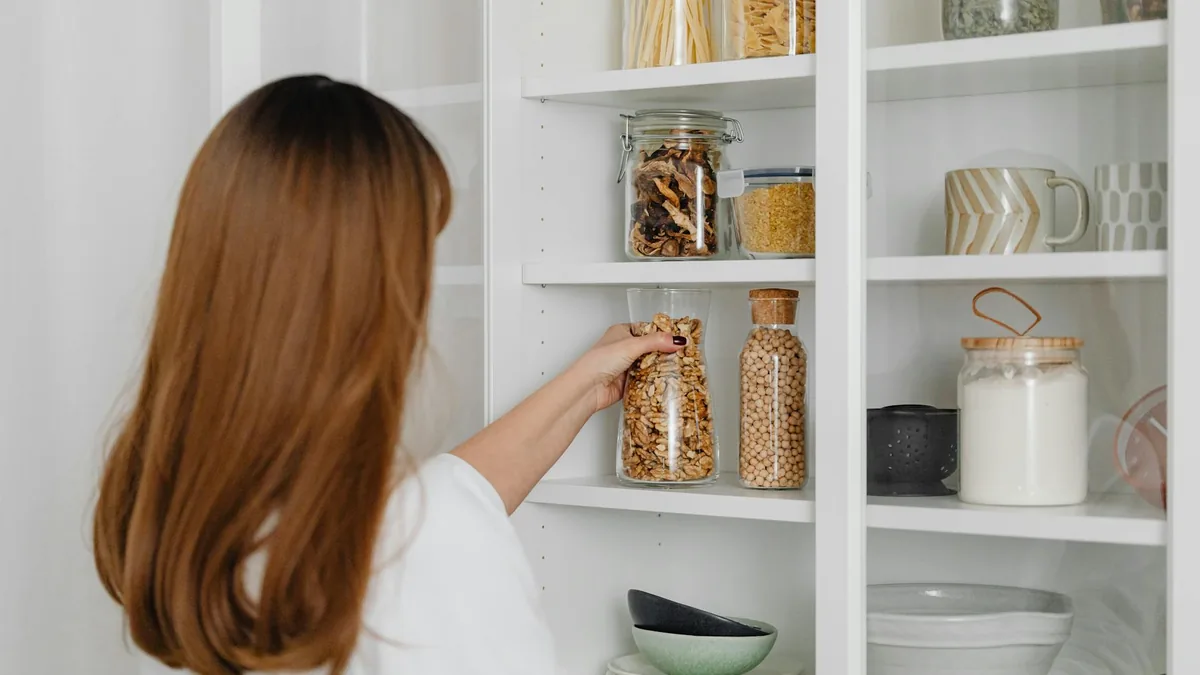
If your pantry turns messy fast, you don’t need a total makeover—you need a setup that matches how you cook and shop. Use simple zones, right-size storage, and a quick reset routine that’s easy to keep up with.
A pantry that stays organized is less about matching containers and more about creating clear “zones” for how you actually cook: daily snacks, breakfast, dinner staples, baking, and backstock. Start by editing what you have, then group by use, and only add bins or turntables where they solve a real problem (like deep shelves or small packets). Finish with a 5-minute weekly reset so clutter doesn’t build up again.
Pantry Setup Options (Quick Comparison)
| Option | Best for | What it helps with | Watch-outs |
|---|---|---|---|
| Open shelving or wire shelves | Seeing everything at a glance | Reduces “lost” food and duplicates | Looks messy faster if zones aren’t clear |
| Pantry cabinet (doors + adjustable shelves) | Small kitchens, rentals, multipurpose storage | Hides visual clutter; easier to keep tidy | Deep shelves can become a “black hole” without bins |
| Bins + labels (selective use) | Families, snack-heavy homes, deep shelves | Keeps categories contained; quick to reset | Over-binning can waste space and create extra steps |
| Decanting into airtight containers | Baking staples, cereal, pantry pests concerns | Streamlines storage; helps freshness and visibility | More upkeep; not necessary for everything |

What to Set Up First in Your Kitchen Pantry
- Start with your “high-traffic” foods. Put the things you reach for daily (coffee/tea, breakfast, snacks, lunch items) at eye level. This is the fastest way to make your kitchen pantry feel easier, even if the rest is still a work in progress.
- Create zones by routine, not by “type.” Instead of separating everything into overly specific categories, group by how you use it: “weeknight dinners,” “baking,” “grab-and-go,” “school lunches,” “entertaining.” This cuts down on half-finished bags and forgotten duplicates.
- Use containment where it prevents mess. Bins are most useful for small packets, snack bars, pouches, seasoning mixes, and anything that topples. If it already stacks neatly (like cans), you may not need a bin.
- Make deep shelves workable. In a pantry cabinet, deep shelves can hide food. Add a simple solution like a handled bin (so you can pull the whole category out) or a turntable for oils, nut butters, and sauces.
- Keep backstock separate. Choose one shelf or bin for extras (spare pasta, canned goods, paper products). If backstock mixes into daily items, it becomes harder to see what you actually have.
- Decant selectively. If you decant, do it for items that constantly spill or go stale (flour, sugar, cereal, rice). Keep the original packaging for anything you won’t finish quickly or that needs cooking instructions.
Quick reality check: The best pantry is the one that’s easy to maintain on a busy week—not the one that looks perfect on day one.

A Simple Pantry Decision Framework (So You Don’t Overthink It)
- What’s your biggest pain point?
- If you can’t find things: focus on zones + visibility (clear bins, risers, turntables).
- If it looks messy: focus on containment (2–4 bins for the worst offenders) and a “drop zone” basket for random items.
- If food expires: focus on a simple rotation rule (new items go behind older items) and keep an “use first” spot.
- How much time will you realistically maintain it?
- Low-maintenance: labels on shelves/bins, minimal decanting, quick weekly reset.
- Medium-maintenance: some decanting, consistent categories, monthly wipe-down.
- Match storage to the space you have.
- Deep shelves: pull-out bins + turntables.
- Narrow shelves: risers and stackable containers.
- Small pantry cabinet: prioritize only what you use weekly; move overflow elsewhere.
- Pick one “reset habit.” Choose a day (or a grocery day) to do a 5-minute sweep: toss trash, return items to zones, and move anything close to expiring into the “use first” spot.
Final Verdict: A Pantry That Works Is One You Can Reset Quickly
The most functional pantry is built around your routines: what you grab daily, what you cook weekly, and what you tend to overbuy. If you have a traditional kitchen pantry, lean into visibility with clear zones and a simple “use first” area. If you’re working with a pantry cabinet, prioritize pull-out bins or turntables so deep shelves don’t swallow items. Either way, a small weekly reset is what keeps the system working long-term—no perfection required.
FAQ
How do I organize a pantry when I don’t have much space?
Get strict about zones and frequency: keep weekly staples at eye level and move rarely used items (bulk, party supplies, specialty baking) higher up or to a separate storage spot. A couple of handled bins can replace “extra shelves” by letting you pull categories out instead of digging.
Do I need to put everything into matching containers?
No. Decant only the items that constantly spill, go stale, or attract pests. For everything else, keep packaging and use bins to corral similar items so the shelf stays easy to reset.
How do I keep my pantry from getting messy again?
Make it easier to put things away than to drop them anywhere: clear zones, one backstock area, and one basket for “random” items. Then do a 5-minute weekly reset (often right before or after grocery day) to put everything back in its category.
If you’re in the middle of a kitchen reset, browse our other quick home organization guides for simple routines that make daily cleanup faster—especially for high-traffic spaces like the kitchen.