
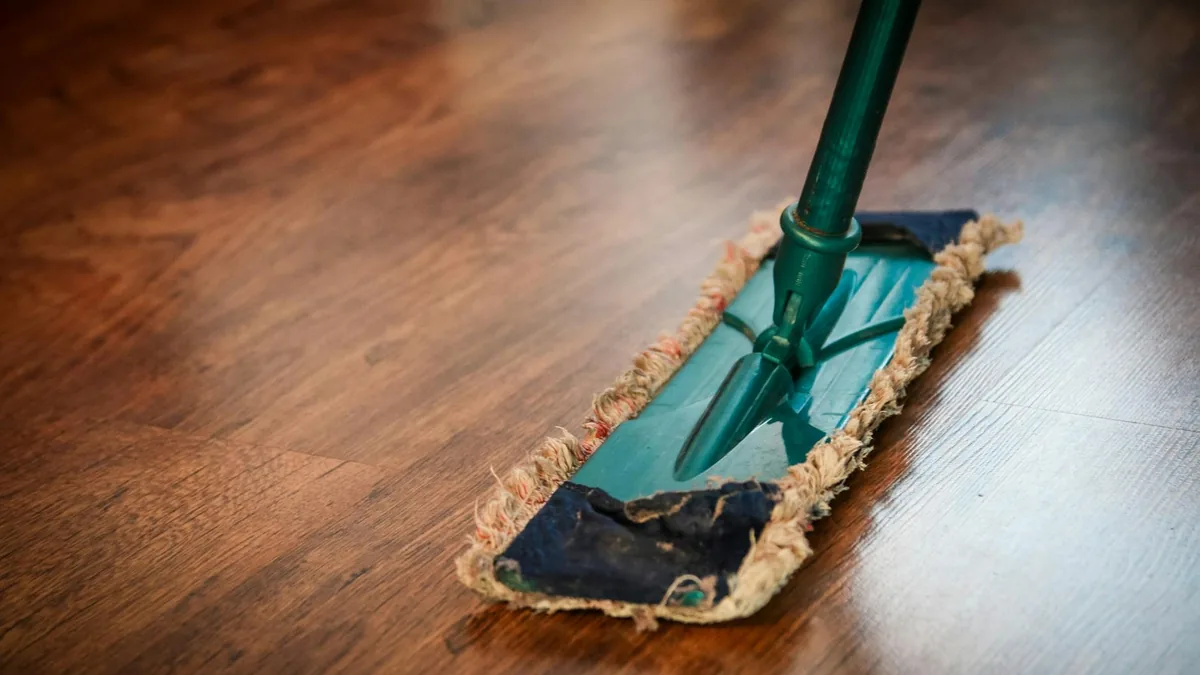
If your floors always feel like they need attention, this guide breaks floor cleaning into a realistic routine: quick daily resets, a weekly clean, and deeper care for wood and hardwood floors—plus how to decide if a floor cleaning machine is worth it.
For most homes, the easiest floor cleaning routine is: dry clean first (sweep, dust mop, or vacuum), then damp-clean only where needed with a cleaner that matches your floor type. Keep water minimal—especially for wood floor cleaning and hardwood floor cleaning—because excess moisture is what causes most long-term issues. If you’re short on time, a consistent “little and often” approach beats occasional marathon cleans.
Quick guide: what to use on each floor type
| Floor type | Best first step | Best next step | Watch out for |
|---|---|---|---|
| Hardwood (sealed) | Vacuum (hard-floor setting) or dust mop | Light damp mop with a wood-safe cleaner | Standing water, steam mops, heavy waxy buildup |
| Laminate | Vacuum or dry microfiber | Damp microfiber, very little liquid | Soaking seams, “all-purpose” products that leave residue |
| Tile or vinyl | Sweep/vacuum edges and corners | Damp mop; spot scrub sticky areas | Dirty rinse water (it can haze the floor) |
| Natural stone | Dust mop frequently | pH-neutral stone cleaner | Vinegar/acidic cleaners, abrasive powders |

Who this routine works best for
- Busy households that need floors to look “good enough” most days, not perfect.
- Pet homes dealing with fur tumbleweeds, paw prints, and the occasional accident.
- Families with kids where crumbs and sticky spots show up daily.
- Small-space living where one main walkway gets dirty fast and needs quick resets.
How to build a floor cleaning routine that sticks
The secret is separating “daily grit control” from “weekly shine.” Most floors look dirty because of dry debris (crumbs, hair, tracked-in dust), so handle that first and you’ll instantly cut down on how often you need to mop.
1) Start with a 2-minute daily reset
- Hit the high-traffic lanes (entry, kitchen path, around the table) with a quick vacuum or dry microfiber mop.
- Do one fast spot check: sticky patch near the trash, splatters by the stove, drips near the sink.
- Keep tools visible: a slim stick vacuum, dust mop, or broom where you’ll actually grab it.
2) Do a weekly damp clean (not a flood)
- Dry clean first so you’re not pushing grit around.
- Use a damp—not wet—mop. Wring thoroughly and refresh the pad/water as it gets dirty.
- Rinse strategy: if your cleaner calls for rinsing, do it; if not, avoid overusing product (residue can attract dirt).
3) For wood floor cleaning and hardwood floor cleaning, keep it gentle
- Skip steam unless your flooring manufacturer explicitly says it’s safe; heat and moisture can be a bad mix for many wood floors.
- Choose a wood-safe cleaner and apply lightly. If the floor looks streaky, you may be using too much product.
- Protect the finish: felt pads under chairs, a doormat at entrances, and a no-shoes habit (even “sometimes”) help more than any fancy cleaner.
4) Decide if a floor cleaning machine fits your life
A floor cleaning machine can be helpful if you’re constantly mopping large areas or dealing with frequent messes. Look for features that match your reality:
- Easy cleanup (pads/tanks that don’t feel like a project).
- Works on your surfaces (especially if you have sealed hardwood, laminate, or mixed flooring).
- Storage footprint that makes sense for your closet or laundry room.
- How it handles edges: many machines miss baseboards and corners, so you’ll still need a quick detail tool sometimes.

A simple decision framework: mop, machine, or “spot clean”?
- If your floor looks dusty but not sticky: dry clean only (vacuum/dust mop). This is often enough for day-to-day.
- If you have visible footprints, haze, or dullness: do a weekly damp clean with the right product for your floor type.
- If you’re cleaning the same messes over and over (pets/kids/high traffic): consider a floor cleaning machine for speed—then keep a simple spot-clean kit for corners and quick fixes.
- If you’re seeing streaks or sticky buildup: use less product, refresh dirty water/pads more often, and check that your cleaner matches your surface.
Final verdict: keep floors clean by doing less, more often
The most effective floor cleaning plan is a quick daily dry clean plus a once-a-week damp clean that matches your flooring—especially for hardwood floor cleaning, where too much water or the wrong product can cause problems over time. If you’re juggling kids, pets, or open-concept living, focus on high-traffic zones first and let the rest be “maintenance level.” A floor cleaning machine can be a great helper for big areas and frequent messes, but a consistent routine (and the right cleaner) matters more than any single tool.
FAQ
How often should I mop?
For most homes, once a week is plenty, with spot-cleaning in between. If you have pets, kids, or a lot of foot traffic, you may prefer a light damp clean twice a week in the kitchen and entry.
What’s the safest way to clean sealed hardwood floors?
Vacuum or dust mop first, then use a lightly damp microfiber mop with a cleaner labeled for sealed wood floors. Avoid soaking the floor, and wipe up spills quickly.
Why do my floors look streaky after cleaning?
Streaks usually come from too much product, dirty rinse water, or a pad that’s already loaded with grime. Use less cleaner, refresh water/pads more often, and dry clean first so you’re not smearing dust around.
If you’re building a simpler cleaning routine, bookmark this and pair it with a quick “entryway reset” habit—floors stay cleaner when the mess stops at the door. You can also explore our related guides on stain cleanup and low-effort weekly home resets.